
Broadcast and Video Production Sets: Designing Scenic Environments for the Camera
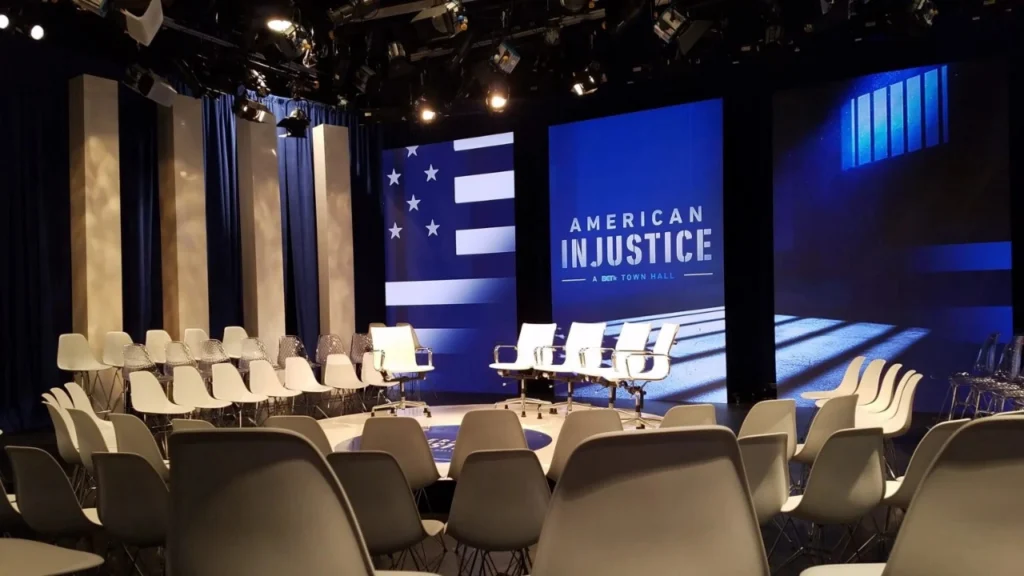
A set that looks impressive in person may behave differently when viewed through a camera. Broadcast and video environments need visual structure, thoughtful finishes and a layout that supports the way a production is filmed. DC Scenics’ website showcases a custom broadcast stage with columns and an LED American flag wall, along with set-build imagery that demonstrates the transition from construction to a finished environment.
Design for the Lens, Not Just the Room
Camera framing changes how viewers perceive a set. Details that seem subtle to an audience in the room can dominate a close-up, while elements that look balanced from the front may feel crowded in a wide shot. Designers should consider likely camera positions, shot sizes, presenter movement and the relationship between scenic features and screens.
Create a Clear Visual Hierarchy
A strong set gives the viewer an obvious focal point without distracting from the people or content on screen. Columns, scenic walls, graphic surfaces and LED displays can establish structure, but their placement should support the program. Consistent spacing and intentional negative space often make a set feel more polished than adding more decorative elements.
Choose Finishes That Perform on Camera
Glossy surfaces, transparent materials and metallic details can respond unpredictably to lighting. Matte or controlled finishes may reduce unwanted reflections, while color and texture should be reviewed under the planned lighting conditions. Material choices depend on the look of the production, the camera setup and the level of detail viewers will see.
Coordinate Scenic Elements With Screens and Lighting
LED walls and displays can provide motion, graphics or information, while the physical scenic pieces create depth and a recognizable frame. These systems should be planned together. Screen brightness, content contrast, scenic color and lighting levels all affect the final image. Coordination before fabrication can reduce visual conflicts during setup.
Plan for Assembly, Access and Reuse
Production schedules may require scenic elements to move through loading areas, doorways, elevators or tight studio spaces. Modular construction and sensible connection points can make installation more manageable. If a set will be reused, the brief should also address storage, transport protection, durability and how the design might adapt to future productions.
Explore the DC Scenics Portfolio
DC Scenics presents broadcast-oriented scenic work on its website, including the American Injustice set and imagery of a set under construction. When discussing a broadcast build, share the camera plan if available, stage footprint, screen requirements, lighting context, production schedule and whether the set is temporary or intended for repeated use.
Frequently Asked Questions
What makes a broadcast set different from a standard event backdrop?
Broadcast sets must be considered from camera angles and shot sizes as well as from the audience’s in-room perspective.
Why do finishes matter for video sets?
Some finishes can create glare or distracting reflections under studio lighting, so surface treatment should suit the camera and lighting environment.
Can scenic fabrication be combined with LED walls?
Yes. Physical scenic elements can be planned around LED walls, screens and other production components.
What should be included in a broadcast set brief?
Include the studio footprint, camera positions, screen sizes, lighting information, branding, production dates and any reuse or storage needs.
Does DC Scenics show broadcast set examples?
Yes. Its website includes a broadcast set featuring columns and an LED American flag wall, plus construction-stage imagery.